Section 177 of Cr.P.C. deals with a situation of ordinary place of inquiry or trial. Every offence ordinarily be inquired and tried by the Court in whose local jurisdiction it was committed. Section 178 of Cr.P.C. deals with a situation on place of inquiry or trial. When an offence was commissioned in several local areas; […]
Section 164-A Cr.P.C. deals with medical examination of the victim of rape. While the rape was said to have committed and or an attempt was made, the concerned woman must be subjected to medical examination by the registered medical practitioner employed in a government hospital or a hospital run by the local authority, if not,[…..]
The Police Officer has the powers to arrest a person without having received any Warrant of Arrest from the concerned Magistrate provided the person has; Commissioned a Cognizable Offence in the presence of that Officer, or A Complaint against that person was received on commissioning of a Cognizable Offence, or Sufficient information received against the[…..]
When any person, who is a Judge or Magistrate or a Public Servant and who can never be removed without prior sanctions of the Union Government or the State Government. And, who is accused of any Offence, alleged to have committed while discharging his official duty, no Court shall take Cognizance of such Offence unless[…..]
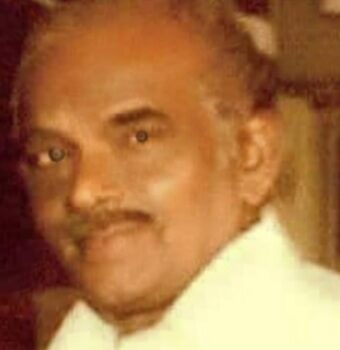
N. Panchaksaramoorthy, a known face amongst the Advocates in the High Court of Madras. Who is even fondly called “Panchu Sir” by his fellow colleagues, clients, well-wishers and junior Advocates! Mr. Moorthy got his enrolment done in the Bar Council of Tamil Nadu & Puducherry in the year 1966 and since then he is into[…..]
Section 167 Cr.P.C. deals with a situation what if investigation was not completed within 24 hours. When a person is arrested and kept in [Police] custody and there is no possibility of investigation would complete within 24 hours as fixed by the law under Section 57 of Cr.P.C., more so, the Investigation Officer who is[…..]
Decoding Section 407 of Code of Criminal Procedure. When the High Court, from the available information at its disposal, is of the opinion that; Unbiased inquiry or trial in the Subordinate Court is doubtful Question of law may arise Its own Order may be required, convenience of parties or witnesses or for ends of justice[…..]
Only the Supreme Court has powers to effect interstate transfer of Criminal Case. The Supreme Court, if finds it necessary, and for practical reasons, transfer a Criminal Case or Appeal from one High Court to another High Court or from one Subordinate Court of a High Court to the other Subordinate Court of the other[…..]
Section 157 of Cr.P.C. deals with a situation with regard to investigation, how the investigation be conducted by the Investigation Officer [IO] and when he can proceed with the arrest of the Accused. Based on the information received on commission of offence and or from the powers derived by the Officer Incharge under Section 156[…..]
Section 156 of Cr.P.C. allows Police to conduct investigation into any cognizable case without the order of the concerned Magistrate under which the Police Station and / or the Investigation Officer functions and no proceedings of theirs be questioned by the Court at any stage. Otherwise Clause 3 of Section 156 empowers Court to direct[…..]